
AI Simultaneous Interpretation
The interpreter is AI. The equipment is real. We patch the AI interpreting engine into the venue's own interpretation transmitter, so your audience listens on the usual receivers and earphones — no app to install, no phone to take out.
- Languages
- Up to 32 channels
- Delay
- A few seconds
- Attendee device
- Not needed
What Is AI Simultaneous Interpretation?
AI simultaneous interpretation replaces the interpreter in the booth with a software engine. The engine listens to the speaker's live audio, transcribes the speech as it happens, translates it into the target language, and delivers the result in a natural synthetic voice. All of it happens within seconds, while the speaker is still talking. To the listener the result is familiar: a voice in their own language, in their earphone.
The service is searched for under several names — AI simultaneous interpretation, AI interpreting, machine interpreting, real-time AI translation. They all describe the same arrangement: the translation is produced by a machine rather than a person, while the listening experience stays exactly as it was.
What sets our setup apart is where the translation is delivered. Almost every AI interpretation platform on the market is built around sending audio to the attendee's own phone: install the app, scan the QR code, bring your own earbuds. In our setup the AI output goes into the venue's interpretation transmitter instead. The equipment is the same equipment, the receivers are the same receivers, the hand-out is the same hand-out — only the voice on the channel comes from a machine.
How It Works on the Day
Exactly one link in the chain changes. Everything before it and after it works the way it always has.
We take a clean feed
We take the same feed off the sound desk that would otherwise go to the interpreter in the booth.
The engine translates
The AI transcribes, translates and voices the speech, producing a separate stream for each target language.
We patch it into the transmitter
Each language stream goes into the venue's IR or RF transmitter as its own channel.
The room listens
Delegates pick up a receiver, select their channel and listen — exactly as before.
AI or Human Interpreter?
The right answer depends on the session, not on the event. The table below is the comparison our clients have already run in their heads before they call.
When we tell clients not to use AI
Anywhere the interpreted words carry legal or contractual weight: court and arbitration, medical consent, notarised signings, collective bargaining, diplomatic negotiation. A human in the booth is also the right call for panels built on unscripted debate, for investor and board communication, and anywhere a mistranslation would be expensive to walk back. This is a technical limit, not a sales preference.
If your session falls into that group, see our simultaneous interpretation and interpreter services instead.
The Hybrid Model: Use Both at One Event
On multi-track programmes the most economical setup treats the two as complements rather than rivals. The transmitter and the receivers are the same throughout, so a delegate simply changes channel.
Human interpreters
- Plenary hall and opening sessions
- Press conferences and Q&A
- Sessions with legal or commercial weight
- Panels built on open debate
AI interpretation
- Breakout rooms and workshops
- Technical presentations and product training
- Long-tail languages that cannot justify a booth
- Poster sessions and side events
The booths, consoles, transmitters and receivers both sides need come from our interpretation system rental service.
Why Receivers Beat Attendee Phones
Every phone-based AI interpretation platform rests on one assumption: that everyone installs the app and brings their own earbuds. In a real hall, that assumption breaks in four places.
Phone approach: 300 people stream audio at once, on Wi-Fi that was never dimensioned for it.
Ours: the audio reaches the room over IR or RF. Only our rack touches the network, and coverage does not degrade with headcount.
Phone approach: anyone who skips the app, forgets earbuds or has an incompatible handset simply gets no interpretation.
Ours: a receiver is handed out at the door. No setup step, and nobody is left out.
Phone approach: a full day of interpretation drains the battery of the phone the delegate also needs for everything else.
Ours: receivers run a full working day and recharge overnight in their charging cases.
Phone approach: corporate device policies and guest-network restrictions block the app more often than planners expect.
Ours: nothing is installed on anyone's device — the receiver is standalone hardware.
What We Supply
Engine integration
We select an AI interpreting engine suited to your event, patch it into the audio chain and test the path end to end during setup.
Custom glossary
Brand names, acronyms, product names and sector terminology loaded before the event — the single biggest lever on output quality.
Transmitter and channel map
IR or RF transmitter, radiator placement and one channel per language, up to 32 channels.
Receivers and earphones
A disinfected receiver and earphone per delegate, with charging cases and a count sheet.
Live captions
Translated live subtitles on the hall or side screens on request, plus a transcript afterwards.
Redundant link and technician
A dedicated, backed-up connection for the processing path, an on-site technician throughout, and a fallback plan to human interpretation.
How Does Pricing Work?
Four things drive the price: session hours, the number of output languages, the receiver count in the room, and extras such as live captions. The difference from human interpretation is that adding a language adds no booth and no interpreter day rate — which is why the gap widens most on multilingual programmes. The equipment side is unchanged: transmitter, receivers and a technician are still required. Send us your running order and language list and we will return an itemised quote within 24 hours.
Where AI Interpretation Works Best
Prepared content, a single speaker and a multilingual audience — where those three meet, AI interpretation is a strong option.
Live AI Captions and Transcripts
The engine that produces the audio also produces a live text stream. We can put that stream on the hall screen, on a second screen beside the stage, or into a web view delegates open on their own device. Captions work alongside the interpreted audio rather than instead of it: a listener can follow on screen while listening on the receiver.
Captions bring two practical benefits beyond the translation itself. The first is accessibility: attendees who are deaf or hard of hearing can follow the session on screen. The second is the archive — when the event ends you hold a searchable transcript of every session, which makes minutes, newsletters and training material far quicker to produce.
Related Services
Recent Events
Selected highlights from our successfully completed projects
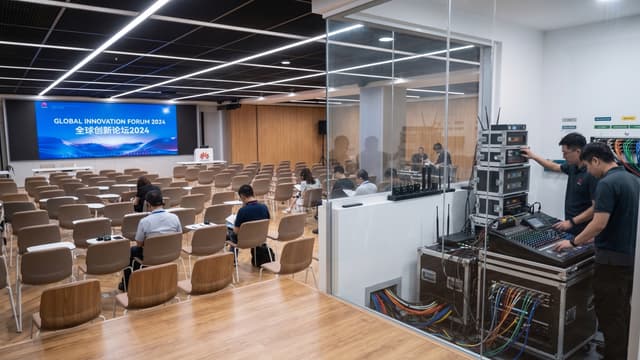 Training
Huawei Yıllık Toplantısında Ekipman Desteği
Huawei genel merkezinde düzenlenen üst düzey yöneticilerin katıldığı toplantı süresince, toplantı ekipmanları ve toplantı teknolojileri tarafımızdan sunuldu.
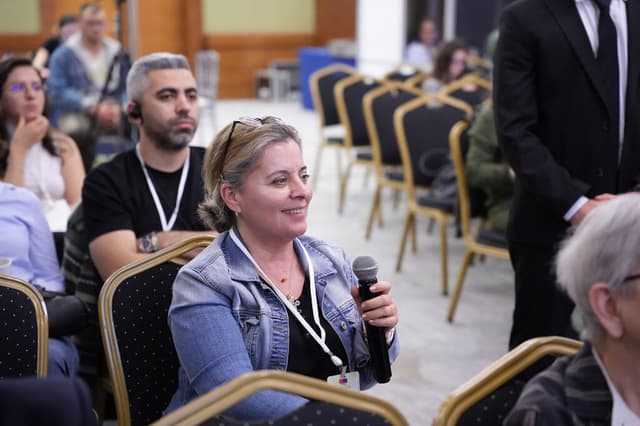 Seminar
Skup İstanbul Projesinde Simultane Çeviri
İstanbul için Sürdürülebilir Kentsel Hareket Planı'nın hazırlanmasını konu alan projenin İstanbul'da gerçekleştirilen toplantısında simultane ekipman kiralama ve simultane çeviri hizmetimiz ile yerimizi aldık.
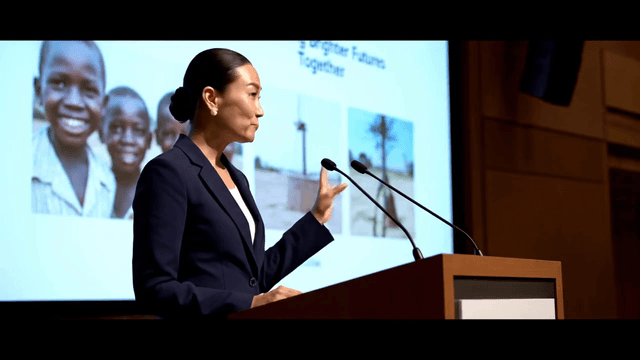 Seminar
Tekstil Sanayi İşverenleri Sendikası Strateji Toplantısı
Türkiye TSİS'nın İstanbul Metrocity'deki merkezinde gerçekleştirilen strateji toplantısı süresince simultane çeviri hizmeti şirketimiz tarafından sağlandı. Hibrit teknoloji kullanılarak gerçekleştirilen toplantıda hem sahada fiziki simultane ekipman hem de Zoom ortamında simultane çeviri hizmeti sağladık.
Summitİsedak Strateji Toplantısı
İslam İşbirliği Teşkilatı Daimi Ekonomik Komitesi tarafından düzenlenen Strateji Toplantısı'nde simultane çeviri hizmeti sağladık.
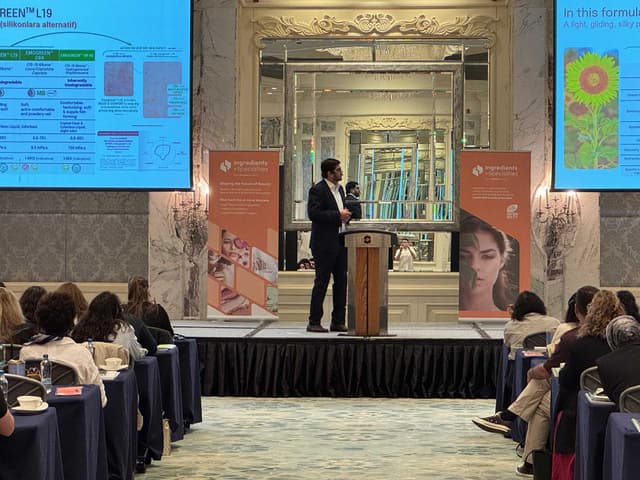 Launch
Simultaneous interpreting during the cosmetics event
13 Mayıs’ta Shangri-La Bosphorus Istanbul’da, Kale Care Chemicals ve Univar Solutions iş birliğiyle gerçekleştirilen seminerde sektörün önemli paydaşları bir araya geldi. Kozmetik ve kişisel bakım sektöründe giderek önem kazanan phenoxy free koruyucu çözümleri, teknik ve uygulama odaklı bir bakış açısıyla paylaşıldı. Bu önemli toplantı'da sunduğumuz Bosch simultane sistem, dijital teknolojiler, kablosuz mikrofon ve ses sistemi ile toplantının kusursuz şekilde yerine getirilmesini sağlamış olduk.
 Training
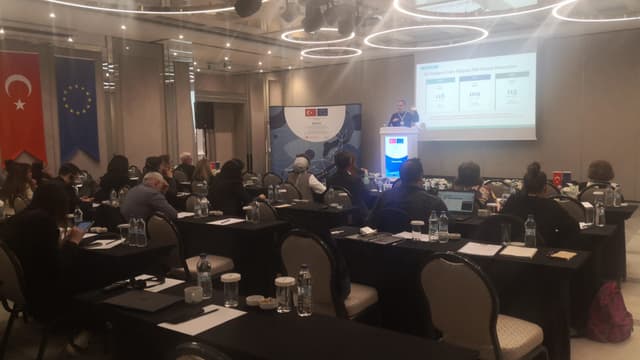
Simultaneous Equipment Rental for EU Project Training
The services we offered during the 5-day training conference held at the Divan Hotel in Ankara from May 4–8, 2026, included the rental of simultaneous interpretation booths, a Bosch simultaneous interpretation system, delegate microphones and wireless microphones, a mobile stage, a digital lectern, and a presentation control unit with dual PC control.
Frequently Asked Questions
What is AI simultaneous interpretation?
AI simultaneous interpretation is real-time spoken translation produced by software rather than by a human interpreter. The system listens to the speaker's live microphone feed, transcribes it, translates it, and speaks the result in the target language — continuously, while the speaker is still talking. The audience hears a synthetic voice on their own language channel, exactly where a human interpreter's voice would otherwise be.
How does AI interpretation work at a live event?
We take a clean audio feed from the venue's sound desk — the same feed a human interpreter would receive in a booth — and route it into the AI interpreting engine. The engine returns one translated audio stream per language, and we patch those streams back into the interpretation transmitter as separate channels. From the audience's point of view nothing has changed: they pick up a receiver, select their language, and listen.
Can the audience use our normal interpretation headsets?
Yes, and this is the part most AI interpreting offers get wrong. Almost every AI interpretation platform on the market asks each attendee to install an app and listen on their own phone. We do the opposite: the AI output goes into the same IR or RF transmitter that carries human interpretation, so your audience uses the standard receivers and earphones we deliver to the venue. No app, no QR code, no personal device, no attendee left out.
Is AI interpretation as accurate as a human interpreter?
Not in every situation, and we would rather say so up front. On clear, prepared, single-speaker content — keynotes, technical presentations, product and training sessions — modern engines are genuinely strong, and with your terminology loaded in advance they handle domain vocabulary well. They lose ground on heavy accents, crosstalk, idiom, humour, deliberate ambiguity and unstructured debate, where a human interpreter reads intent rather than words. Choose the tool to match the session.
When should I not use AI interpretation?
Avoid it where the interpreted words carry legal or contractual weight: court and arbitration proceedings, regulated medical consent, notarised signings, collective bargaining, and diplomatic negotiation. We also recommend a human interpreter for sessions built on unscripted debate, for high-stakes investor or board communication, and anywhere a mistranslation would be expensive to walk back. For those, see our simultaneous interpretation service.
How many languages can run at the same time?
Many more than a booth setup allows. Each additional human language pair means another booth, another pair of interpreters and another slice of floor space, so most events stop at two or three. An AI engine produces additional language streams in parallel at a marginal cost, so ten or more simultaneous languages is practical. The real limit becomes the channel count of the transmitter in the room, which reaches 32 on the digital systems we deploy.
How much delay is there?
A few seconds. The engine has to hear enough of a sentence to transcribe it, translate it and speak it, so the translated audio trails the speaker by noticeably more than a human interpreter would. Audiences adapt to it within a few minutes. It matters most in fast question-and-answer exchanges, which is one reason we often put humans on the discussion sessions and AI on the presentation sessions.
Does it need internet at the venue?
The engine itself runs on a network connection, so yes — we need a stable, dedicated line for the processing path. The critical difference from phone-based AI platforms is that your audience does not. Only our rack needs connectivity; the translated audio reaches the room over IR or RF, which does not care about venue Wi-Fi. We bring a redundant connection and test the path during setup.
Is AI interpretation cheaper than human interpreters?
Usually, and the gap widens with every language you add. A human setup is priced per language pair — two interpreters plus a booth for each — while AI pricing is driven mainly by session hours and the number of output languages, with no booth and no interpreter day rates. The equipment side is unchanged: you still need the transmitter, the receivers and a technician. The saving is in the booths and the interpreter fees, not in the hardware.
Can we combine AI and human interpreters at the same event?
Yes, and for multi-track programmes it is usually the best answer. We run human interpreters on the plenary hall and the sessions that carry commercial or legal weight, and AI on the breakout rooms, the workshops and the long-tail languages that could never justify a booth of their own. It is the same transmitter and the same receivers throughout, so delegates simply change channel.
Does AI interpretation handle Turkish well?
Turkish is well supported by current engines, both as a source and as a target language, and quality on prepared conference content is good. Turkish does make the delay more noticeable than it is in English: the verb usually arrives at the end of the sentence, so the engine has to wait for more of the utterance before it can commit to a translation. We account for that when we plan which sessions get AI.
What about confidentiality and data protection?
Audio leaves the room to be processed, and that has to be part of your decision. Before the event we confirm where processing happens, what retention applies, and whether the session audio and transcripts are deleted afterwards, and we can put that in writing alongside a confidentiality undertaking. For content that cannot leave the building under any circumstances, a human interpreter in a booth remains the correct choice.
Can we get live subtitles as well as audio?
Yes. The same engine produces a live text stream, so we can put translated subtitles on the hall screens, on a side screen, or on a web view delegates open on their own device. Captions are also the accessible option for attendees who are deaf or hard of hearing, and they give you a usable transcript of the session afterwards.
What do you need from us to set it up?
A clean audio feed from the sound desk, the language list, and the running order. Send us speaker names, presentation decks, acronyms, brand names and technical terminology in advance and we load them into the engine as a custom glossary — this is the single biggest lever on output quality. We handle the rest: the processing rack, the channel mapping, the transmitter, the receivers and an on-site technician.
How far in advance should we book?
One to two weeks is comfortable for a standard programme, which is far less lead time than human interpretation requires, since there are no interpreter diaries to match. Allow longer if you want a substantial custom glossary built, if the programme is multi-track, or if you need a venue survey for receiver coverage.
Which sessions need AI, and which need a person?
Send us your running order and language list. We'll map session by session which ones suit AI and which need a human interpreter, and return an itemised quote within 24 hours.
AI and human interpreters can run at the same event — the transmitter and receivers stay the same.